Commercial Waste Removal in Herne Hill

Commercial waste removal in Herne Hill helps shops, offices, studios, hospitality venues and managed properties keep waste moving out of the way without interrupting the working day. Our service covers routine commercial collections and one-off clearances for mixed business rubbish, bulky items and recyclable materials, with a practical approach that suits busy premises. If you need a reliable way to deal with regular build-up, we focus on straightforward removal, sensible sorting and clear communication from the outset.
We work with business waste that may include packaging, office furniture, shop fit-out leftovers, display materials and general non-hazardous rubbish from day-to-day operations. The aim is to make the process orderly and manageable, whether the job is a single clearance after a refit or an ongoing arrangement for recurring waste. Good waste handling starts with knowing what needs to go, and our service is built around that simple idea.
For planned work, it helps to share the type of waste, access details and any timing constraints so the collection can be organised with as little disruption as possible. If you are comparing options for pricing and quotes, it is useful to remember that the mix of materials, volume and loading conditions all affect the final arrangement. Request a quotation when you are ready, and we can discuss the most suitable approach for your premises.
Business waste collections for everyday operations
Regular commercial waste collection suits workplaces that generate a steady flow of rubbish and recyclable material. Offices often need paper, card, packaging and broken furnishings removed in a way that keeps circulation areas clear. Retail premises may need stock packaging, shelf debris and old point-of-sale items collected after deliveries, refurbishments or seasonal changes. The right service keeps waste from becoming part of the working environment.
We can also help when a workplace needs a tidier reset after a relocation, consolidation or long period of accumulation. That may involve mixed waste from back rooms, storage cupboards, meeting spaces or service areas, all sorted for removal in a sensible sequence. For businesses that need more detail on how our work is handled, our business waste removal page gives a focused overview of the main commercial collection service.
Supported waste removal for commercial sites is usually most effective when the waste stream is identified in advance. That can include whether items are loose, bagged, boxed or stacked; whether heavy components are involved; and whether anything needs extra care during lifting and transport. A clear description supports a smoother collection, especially where access is shared or loading space is limited. Practical planning saves time on the day and helps keep the process orderly.
Office clearances and workspace clear-outs

Office waste removal is often about more than simple rubbish bags. Desks, chairs, filing units, monitors, cabinets and mixed paperwork storage can all require methodical handling, particularly when a team is reorganising, relocating or replacing furniture. We approach office clear-outs in a way that helps businesses free space without creating unnecessary disruption, and we can separate reusable, recyclable and disposal items where appropriate.
Where paper records or confidential material are involved, disposal needs can be more considered. Our site includes a dedicated confidential shredding page for businesses that want to manage sensitive paperwork carefully alongside general clearance tasks. That is useful for office teams, professional practices and shared workspaces that want waste handled with attention to privacy as well as efficiency.
Before a clearance, it is sensible to identify items that must remain on site, anything that requires dismantling, and whether lifts, stair access or loading bays may affect the job. These details help avoid delays and support a cleaner handover when desks or storage units are being taken away. If you are planning a move or refurbishment, you can also look at our office clearance service for a more structured version of the same work.
Bulky item removal for commercial premises
Many businesses need help with larger items that are awkward to move and unsuitable for ordinary waste bins. That can include worn seating, reception furniture, filing cabinets, shelving, counters, appliances and equipment removed during refurbishments or changes in layout. Our furniture disposal and clearance services are designed to take bulky waste out in an orderly way, reducing the need for repeated trips or ad hoc handling by staff.
Where the items are clearly furniture, our furniture clearance page explains the general service, while furniture disposal covers the destination for unwanted pieces that have reached the end of their useful life. For heavier household-style fittings used in premises such as managed flats above shops or mixed-use buildings, the same practical principles apply: safe loading, sensible separation and a tidy finish.
In commercial environments, bulky item removal is often easiest when the load is grouped by type and placed where it can be reached without moving it more than once. That makes a difference in storerooms, basements, back offices and shared access areas. Careful staging is not essential, but it does help, especially when several teams use the same entrance or when collection time must be kept tight.
Clearances for fit-outs, refurbishments and builders waste
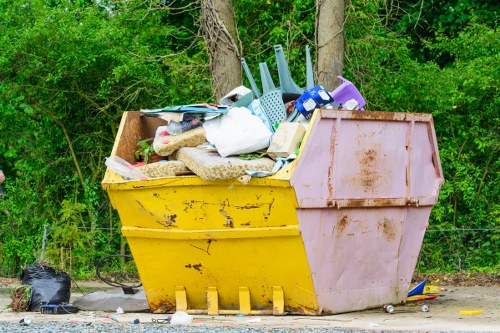
Trade and refurbishment projects often produce a different kind of waste from everyday operations. Offcuts, packaging, broken fixtures, plaster fragments, old fittings, timber, boards and mixed renovation debris all need collecting in a way that fits the pace of the project. Our builders waste clearance service is useful when a commercial site is being altered, repaired or stripped out and the waste needs removing as work progresses.
For customers who are comparing project clean-up options, the builders waste clearance page gives a direct route to that service, while waste removal provides a broader overview of the general collection work we carry out. The decision between those pages usually depends on the type of waste and whether the job is mainly routine rubbish or mixed construction debris.
Fit-out waste is often best managed in stages rather than left until the end. That can mean separate removal of packaging, old fixtures and heavier fragments as the project moves forward. When waste is removed promptly, trades can keep work areas clearer and make better use of storage and loading space. If you are arranging a larger commercial clearance, it is worth discussing access, lifting conditions and any items that may need to be dismantled first.
Recycling, separation and responsible handling
Commercial waste removal is not only about taking items away; it is also about handling them in a sensible order. Offices, retail units and shared workspaces often generate a mix of paper, card, plastics, metals, wood, fixtures and general rubbish. Sorting those streams properly can make the overall process more efficient and can support better recycling decisions where suitable materials are present.
Our recycling and sustainability page provides a useful overview of how waste is considered for reuse and recycling within the limits of the materials involved. Not every item can be recovered, and some waste must still be disposed of as general rubbish, but separating what can be handled more carefully is an important part of a well-run commercial clearance.
For business customers, a sensible question to ask is not only what needs removing but also how the material is stored before collection. Bagged waste, boxed paperwork, loose fittings and stacked items can each require a different loading approach. Good separation at source supports better handling later, especially where premises produce mixed waste from several departments or tenants.
About Herne Hill
Herne Hill is a district in south London that lies across the boundaries of the London Borough of Lambeth and the London Borough of Southwark. It is known for its mix of residential streets, local shopping parades and transport links, with Herne Hill railway station forming a key part of the area’s identity. The district sits between Brixton, Dulwich, Camberwell and Tulse Hill, giving it a position that connects several well-known parts of inner south London. Brockwell Park is one of its most recognisable landmarks, a large green space close to the centre of the district that includes open lawns, mature trees and Brockwell Lido, an outdoor swimming pool opened in 1937. The park is a major feature of local life, both for recreation and for wider views across the surrounding neighbourhoods. Herne Hill also has a long association with sport and events at nearby Dulwich Road and the historic velodrome at Herne Hill, which played an important role in British cycling before and after the Second World War. The area’s built environment is shaped by Victorian and Edwardian housing, smaller commercial frontages and a patchwork of streets that reflect the district’s growth during London’s suburban expansion. Alongside its transport and parkland, Herne Hill has a modest but distinctive high street character, with cafés, independent shops and community spaces contributing to its everyday rhythm. The district’s name is often linked with the slope or rise in the local terrain rather than any single building, and today it remains a recognisable London neighbourhood with a strong sense of place.
Waste handling for shops, hospitality and shared premises
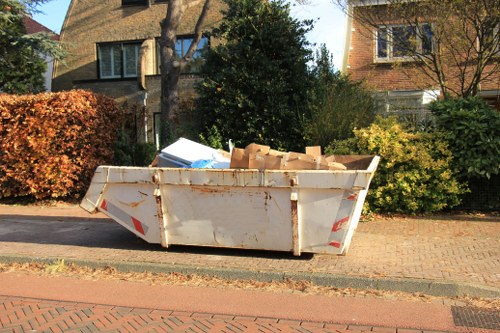
Shops, cafés, takeaways, restaurants and other customer-facing premises can generate awkward waste in short bursts as well as on a routine basis. Packaging, damaged stock, shelving, old menu boards, worn chairs and storage contents can all build up quickly, especially during refits or stock changes. Our commercial waste removal service is suited to these settings because it can deal with mixed items that do not belong in ordinary day-to-day refuse streams.
For premises that hold equipment as well as furniture, the right approach depends on what is being removed and how it is stored. Fridges, chillers and similar items may need separate handling, and our fridge and appliance removal page is the best place to start where electrical or cold-storage units are part of the waste. Where the waste is mainly general and non-specialist, a broader collection can usually be planned around the access and loading conditions on site.
Useful preparation is often simple: make a short note of the items, keep loading routes as clear as possible, and flag anything that may be too heavy, fragile or fixed in place to move casually. If you are not sure whether the contents of a back room, store or service area should be grouped together, we can help you describe it before collection. Clear information makes commercial clearance easier and helps avoid unnecessary back-and-forth.
Garage, loft and storage space clearances for business property
Some business waste appears in spaces that are not obviously work areas at first glance. Garages, lofts, cupboards, plant rooms and storage units in commercial or mixed-use buildings can all accumulate old stock, broken equipment, seasonal items and leftover materials. These spaces often need a careful sort before removal, especially where access is awkward or contents have been stored for a long time.
For customers with mixed storage clear-outs, the relevant service pages include garage clearance, loft clearance and home clearance where the property is residential rather than commercial. We also offer flat clearance and house clearance for domestic properties, which can be useful when business and personal items are being dealt with separately at the same address.
These types of clearance often benefit from a simple ordering of the contents before removal begins. Identifying what stays, what goes and what may need extra handling keeps the job more efficient and avoids unnecessary lifting. There is no need to catalogue every item in advance, but a broad sense of the categories involved can make a real difference when storage spaces are cramped or difficult to reach.
Pricing, access and arranging a quotation

Commercial waste removal is usually priced around the amount and type of material, the labour needed to remove it, and any access factors that make the job simpler or more involved. Mixed waste, heavy items, awkward stair access and large volumes can all influence how a clearance is planned. That is why it helps to be clear about what is on site rather than describing the job only in broad terms.
Our pricing and quotes page is the best place to review how quotations are handled. If you are preparing to ask for one, a short description of the waste, the collection location and the access route is usually enough to begin. If the job is part of a larger fit-out, relocation or phased clean-up, it is also worth saying whether the waste will be ready all at once or removed in stages.
To move forward, send the details that matter most, keep the description practical and let us know the time frame you are working to. If you are ready to arrange commercial waste removal in Herne Hill, request a quotation today and we can discuss the right service for your premises.